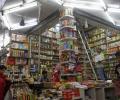
While FMCG companies were not barred from carrying out their operations during the 21-day lockdown, since most manufacture staples and essential products, capacity utilisation remained poor, owing to the restricted movement of raw materials, finished goods, and labour.

'Clearly, the next few months will be very challenging for industry.' 'We are clearly in a phase where recovery is a dream.'
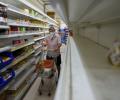
Top companies reported that despite most of them making staples and essential products, movement of raw material, goods and labour remained restricted, impacting sales.

Overcrowding, unsanitary conditions in Asia's largest slum pose big challenges to containment.
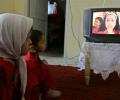
News viewership was the biggest gainer during the first full week of lockdown, growing 298 per cent versus the pre-COVID period between January 11 and 31. Ramayana, whose rerun has begun on Doordarshan, was the top-rated show on Saturday and Sunday.

Cancellation of at least Rs 3,000-crore worth of business has happened in the past few weeks.
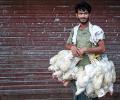
Weak demand from the poultry sector has resulted in a sharp decline in feed prices too, with both soybean and maize prices falling by nearly 25 per cent in the past two months. The poultry market consumes around half of soybean and maize production in India.

'There is a clear business impact. People are avoiding crowded places and gatherings across cities. This is hitting business, both at traditional and modern trade outlets, during the Holi season, which kicked off from Saturday,' says Praveen Khandelwal, general secretary, Confederation of All India Traders (CAIT).

Both indices are down nearly 9 per cent from their all-time highs in mid-January. A sharp reversal seems difficult this time as the peak impact of the virus is yet to play out.

At issue size of Rs 10,355 cr, the offering will be Asia's biggest this year and fifth-largest domestically.
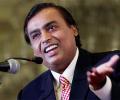
RIL's stake in Network18 would reduce to 64 per cent, from 75%, following the merger
The first to see price hikes will be soaps. In the past six months, domestic palm oil prices have increased by 46 per cent. Palm oil is a key input going into soaps.
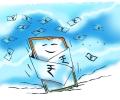
The government holds 90 per cent stake in ITI which is valued at Rs 7,550 crore.
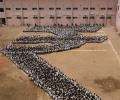
The Street was hoping that investors will lap up shares of high-dividend companies on optimism that their payouts will increase further, thanks to the 20 per cent tax saving. However, the trade failed to materialise as wealthy investors stayed away fearing high tax outgo, and experts raised doubts on whether companies would actually increase cash dole outs.

Experts feel that mall owners anticipate an increase in costs to the tune of 15-20 per cent annually, prompting a mixed response to the '24 hours' initiative. A mall owner said while the policy is good in spirit, implementing it would be a challenge as night shopping or eating out wasn't a habit in Mumbai yet.

'As long as people are eating we will be there,' Rebel Foods CEO Jaydeep Barman tells Viveat Susan Pinto and Niraj Bhatt.

In May 2019, Sebi had penalised the NSE as well as two of its former heads - Narain and Chitra Ramkrishna - for allowing Sampark to provide the dark fibre connectivity to stock brokers, despite not having the authorised licence. Dark fibre refers to an unused optical fibre used for high-speed connectivity.

The companies that have seen sharp erosion of market wealth include YES Bank, Indiabulls Housing Finance, Zee Entertainment, Vodafone Idea, and Bharat Heavy Electricals.

While Unilever has been aggressive, both organically and inorganically in the country, P&G's approach has been about achieving 'balanced growth' in terms of top line and bottom line.

Sinha, who had both agency and client experience having worked at Coca-Cola in the 1970s and early 1980s, was the first woman to set up a national advertising agency. While Tara Sinha Associates was launched in 1985, Clarion was launched way back in 1955 at the start of her career.
 © 2026 Rediff.com - Investor Information - Advertise with us - Disclaimer - Privacy Policy - Sitemap - Feedback - About us - Terms of use - Grievances